
|
Getting your Trinity Audio player ready...
|
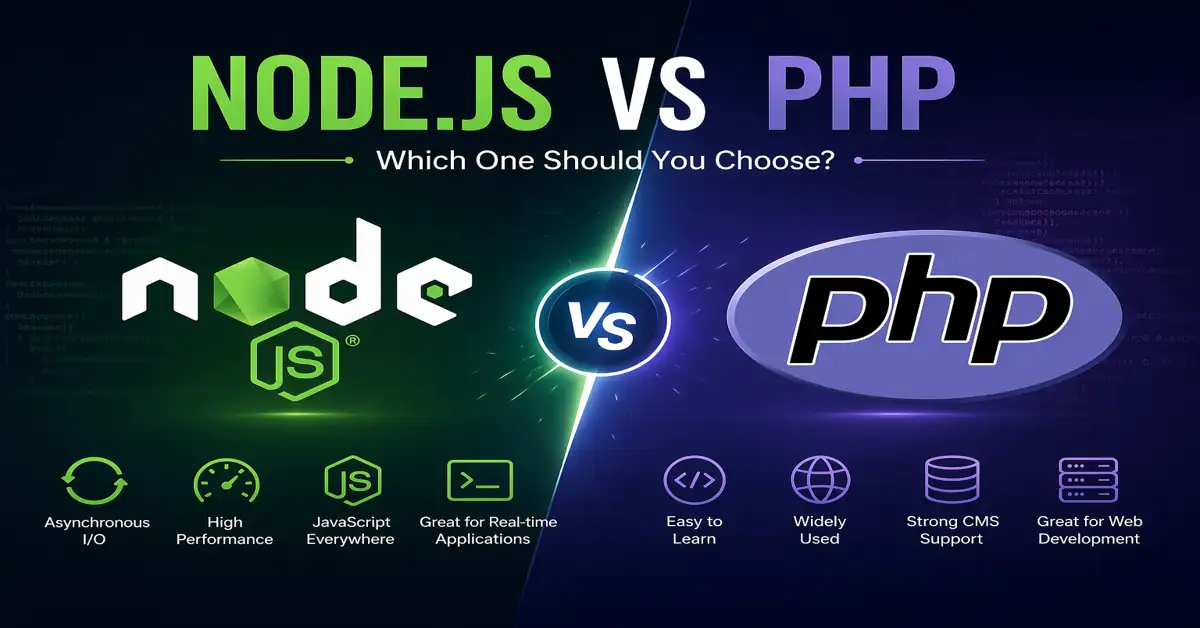
Node.js and PHP both power modern web apps, but they follow very different execution models. Choosing one depends on performance needs, scalability goals, and ecosystem fit.
Core Runtime
Node.js runs on the V8 engine and executes JavaScript on the server. It uses a non-blocking, event-driven architecture.
Node.js documentation: https://nodejs.org/en/docs
PHP is a server-side scripting language designed for web development. It follows a synchronous request-response model by default.
PHP documentation: https://www.php.net/docs.php
Performance
Node.js handles concurrent connections efficiently due to its async nature. It performs well for real-time apps like chats, streaming, and APIs.
PHP executes each request separately. Performance is stable for traditional websites but can require optimization layers (OPcache, caching) for scale.
Scalability
Node.js scales horizontally and vertically with ease using microservices and event loops. Ideal for high I/O workloads.
PHP scales using traditional methods like load balancing and stateless architecture. Tools like Laravel Octane improve performance.
Ecosystem
Node.js uses npm, the largest package ecosystem.
npm registry: https://www.npmjs.com/
PHP has Composer for dependency management and strong frameworks like Laravel.
Composer: https://getcomposer.org/
Development Speed
Node.js allows full-stack JavaScript, reducing context switching.
PHP offers rapid development with mature CMS platforms like WordPress.
WordPress: https://wordpress.org/
Use Cases
Node.js:
- Real-time apps
- APIs and microservices
- Streaming platforms
PHP:
- CMS-based websites
- E-commerce
- Content-heavy platforms
Conclusion
Node.js is better for real-time, scalable systems. PHP remains strong for content-driven websites and rapid deployment.
Pick based on workload type, not trends.

Arsalan Malik is a passionate Software Engineer and the Founder of Makemychance.com. A proud CDAC-qualified developer, Arsalan specializes in full-stack web development, with expertise in technologies like Node.js, PHP, WordPress, React, and modern CSS frameworks.
He actively shares his knowledge and insights with the developer community on platforms like Dev.to and engages with professionals worldwide through LinkedIn.
Arsalan believes in building real-world projects that not only solve problems but also educate and empower users. His mission is to make technology simple, accessible, and impactful for everyone.
Join us on dev community